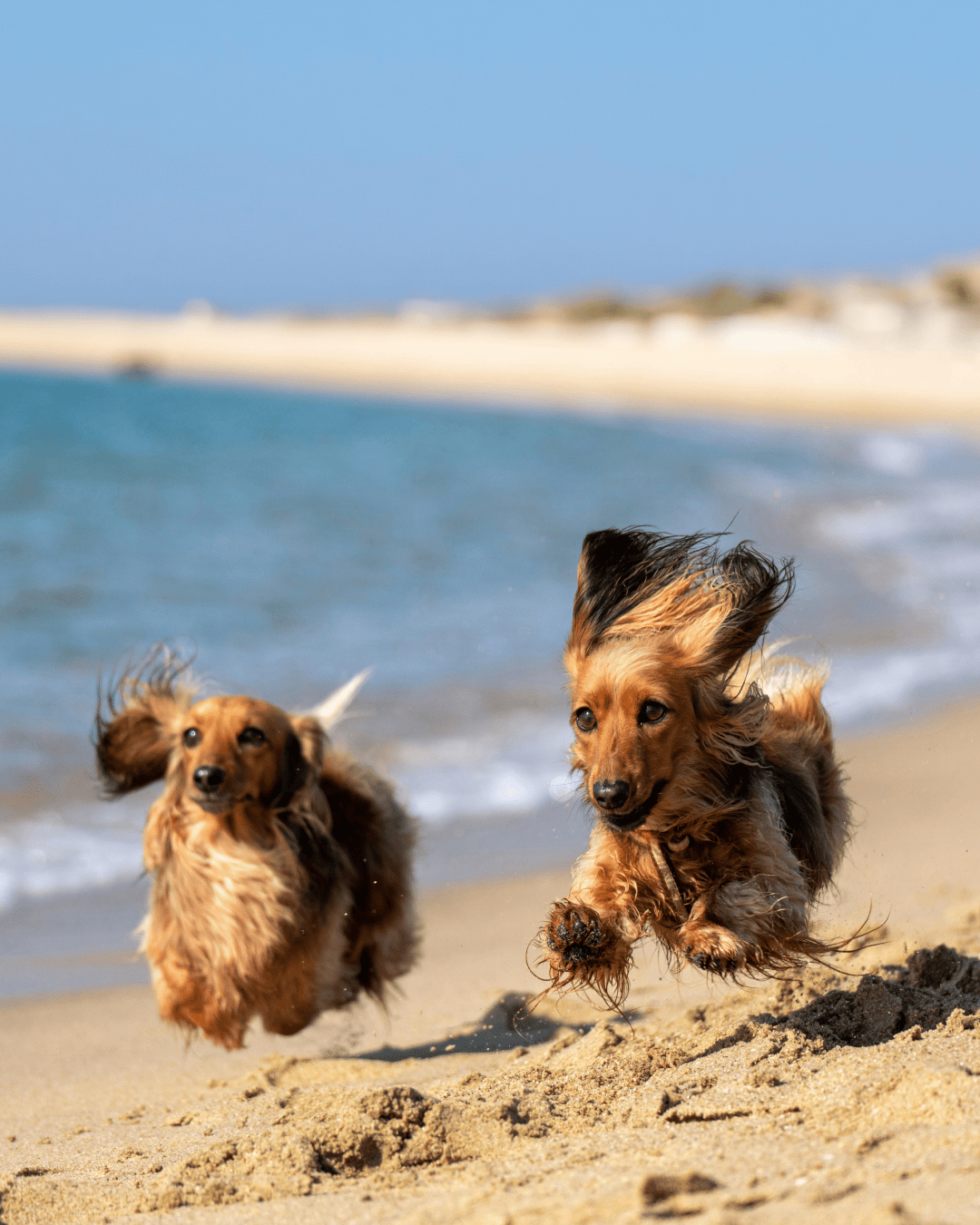
Every summer we see the same story. A dog has the best day of their year at the beach or up in the mountains, and a week later they're at the vet with an ear infection, a hot spot, or something burrowing into a paw. The trip wasn't the problem. The problem was what came home with the dog and stayed there.
Saltwater dries in the coat and leaves salt behind. Sand works down to the skin and sits there. Ticks climb aboard on the trail. Foxtails catch in the fur between the toes and start digging. None of this is a reason to skip the trip. All of it is manageable with a little prep before you load the car and about twenty minutes of work when you get home.
We groom a lot of dogs fresh off beach weekends and camping trips at Bowie Barker every summer, and the dogs who bounce back in a day versus the ones who end up with skin trouble for weeks are rarely different dogs. They just have different routines. Here's ours.
Before You Go: The Pre-Adventure Groom
The best recovery starts before the trip. A dog who shows up at the beach or the trailhead brushed out and mat-free is carrying way less risk than one who arrives with tangles.
Why brushing before a trip matters so much
It comes down to mats. A mat traps whatever gets into it - saltwater, sand, moisture, all of it - and holds it right against the skin. That's exactly the setup for hot spots, the painful bacterial skin infections that show up fast in thick-coated dogs after a swim. A coat that goes into the water already matted comes out as a skin problem waiting to happen.
A good brush-out before the trip removes loose undercoat, breaks up small tangles before they become real mats, and gives water somewhere to go instead of sitting trapped at skin level. For double-coated and long-haired dogs, this one step does more for post-swim recovery than anything else on this list.
Should you shave your dog for a summer of swimming?
No, and this one surprises people. For double-coated breeds like Goldens, Huskies, Aussies, and German Shepherds, shaving removes the layer that actually helps them regulate temperature, opens the skin up to sunburn, and can permanently mess with how the coat grows back. A shaved double-coated dog is often hotter outside than an unshaven one. The AKC has a good breakdown on why.
What helps instead is a de-shedding treatment. Pulling out the dead, packed undercoat lets air reach the skin and lets the coat dry much faster after swimming, without losing the protection the topcoat provides. Trimming the fur between the paw pads and tidying up the sanitary areas also gives sand and seeds less to grab onto. Our services and pricing page has the options by coat type.
The rest of the pre-trip checklist
Trim nails before the trip, not after. Overgrown nails change how the paw hits the ground, and on rocky trails and hard-packed sand that means extra strain and a better chance of a snag or a split. We wrote about what to look for between trims if you're not sure where your dog stands.
Make sure flea and tick prevention is current before any camping or hiking trip. Prevention won't stop ticks from climbing on, but it dramatically cuts the odds that one transmits anything.
And pack fresh water and a bowl. That sounds like trip advice, not grooming advice, but it's both, and the beach section explains why.
What the Beach Actually Does to Your Dog's Coat and Skin
Ocean water is about 3.5 percent salt, and when it dries in a dog's coat, the water leaves and the salt stays. Those leftover salt crystals pull moisture out of the skin and coat, which is why a dog who swims in the ocean all summer without freshwater rinses ends up with a dry, dull coat and itchy, flaky skin. Dogs with allergies feel it fastest, but no coat is immune to a whole summer of it.
Sand makes it worse. Fine sand works through the topcoat and settles at skin level, where it acts like a slow abrasive every time the dog moves. It collects heaviest in the armpits, the groin, between the paw pads, and inside the ears. A dog can look clean from arm's length and still be carrying a lot of sand against the skin.
The ears deserve their own mention. Water that gets into the ear canal during a swim doesn't drain well, especially in floppy-eared breeds, and a warm, dark, damp ear canal is the ideal place for yeast and bacteria to set up shop. Swimming season is when a huge share of ear infections get their start. Our guide to ear care for dogs gets into the breed-by-breed details.
Don't let your dog drink seawater
One more beach warning worth keeping in your head: dogs playing in the waves swallow saltwater, and dogs without fresh water available will sometimes drink it on purpose. Small amounts cause vomiting and diarrhea. Larger amounts cause salt toxicity, which is a real emergency that can progress to tremors and seizures. The fix is simple. Bring fresh water, offer it every 15 or 20 minutes, and pull your dog out of the waves for a break if they're gulping water while retrieving.
What the Trail Does: Foxtails, Ticks, and Burrs
Camping and hiking trade the saltwater problems for plant and parasite problems, and one of them is more serious than most owners realize.
Foxtails are the real hazard of a California summer
A foxtail is the barbed seed head of several common grasses, and by mid-summer in California the plants have dried out, and the seed heads latch onto anything that brushes past. The design is the problem. The barbs only let it move one direction, forward. Once one catches in your dog's coat and reaches skin, movement drives it in.
This isn't a splinter situation. UC Davis veterinarians warn that embedded foxtails don't break down in the body and can migrate through tissue, causing abscesses and infections, sometimes traveling as far as the lungs. They usually get in exactly where a groomer's attention goes: between the toes, inside the ears, in the nose, around the eyes and armpits. Sudden violent sneezing, head shaking, nonstop licking at one spot on a paw, or a swelling between the toes a few days after a hike all mean foxtail until proven otherwise. That's a vet visit, not a wait-and-see.
Grooming is the practical defense here. Fur trimmed short between the paw pads and tidy feathering on the legs and ears gives foxtails less to catch on, and makes the ones that do catch much easier to spot. If your dog is a trail dog, this alone is a good argument for staying on a grooming schedule through the summer.
The tick check is a timed event
Ticks don't transmit disease the moment they attach. For Lyme disease, a tick generally needs somewhere around 24 to 48 hours of feeding first. That window is the whole reason the same-day tick check matters. A tick you find and pull tonight is a very different situation than one you discover at the end of the weekend.
Run your hands slowly over your dog's whole body and hit the spots ticks love: in and around the ears, under the collar, between the toes, armpits, groin, and around the base of the tail. Do a quick pass before you get in the car and a thorough one at home. If you find one attached, grab it with tweezers as close to the skin as you can, pull straight out with steady pressure, clean the spot, and make a note of the date in case anything shows up later.
The First Hour Home: The Recovery Routine
What happens in the first hour back determines most of what happens over the next week. Four steps, about twenty minutes.
Rinse everything out. A real freshwater rinse, down to the skin, gets the salt, sand, and trail debris out before any of it has time to do damage. On thick-coated dogs, part the fur as you go, because a surface rinse on a double coat accomplishes almost nothing. If your dog rolled in something, took on serious sand, or smells like low tide, skip straight to a proper bath. This is exactly what a self-serve dog wash is for: real tubs, warm water, professional dryers, and no sand in your bathroom drain.
Dry down to the skin. A coat that stays damp at skin level for hours is the number one setup for hot spots, and thick-coated breeds like Goldens, Shepherds, and Newfies are the most prone. Towel-dry hard, then finish with a blow dryer on low for dense coats. Give extra attention to the armpits, groin, and base of the tail. Those stay damp longest, and that's where hot spots usually start.
Dry and check the ears. Wipe the outer ear gently with a cotton ball or soft cloth. If your dog swims a lot, a veterinary ear drying solution after each session is cheap insurance. While you're in there, look for redness or debris and take a sniff. A healthy ear smells like almost nothing. A yeasty or sour smell in the days after swimming is an early warning worth a vet call.
Do the hands-on inspection. This is the tick check and the foxtail check rolled into one. Work through the coat with your fingers, spread the toes and look between every pad, check inside the ears, run your hands down each leg. You're feeling for ticks, seeds, burrs, and any new mats that formed while the coat was wet. Wet fur mats fast. A mat you catch today brushes out in a minute. The same mat a week later may have to be clipped out.
The 48-Hour Watch
Most post-adventure problems announce themselves within two days. Here's what to watch for.
A hot spot can go from a small red patch to a raw, oozing, painful sore within hours. If your dog is obsessively licking or chewing one spot, part the fur and look. Redness, moisture, and hair loss in a defined patch is a hot spot. Caught in the first day, a small one can often be handled at home by stopping the licking and cleaning it gently, but Cornell's vets note that a sore more than 24 hours old is probably infected and needs a veterinarian.
Head shaking, ear scratching, or a head tilt in the days after swimming points to a brewing ear infection. Caught early, these are easy to treat. Left alone, they turn chronic, and chronic ear infections are some of the most stubborn problems in veterinary medicine.
Nonstop licking at one paw, sudden sneezing fits, or a soft swelling anywhere on the body after time in dry grass means foxtail. Don't wait on that one.
And keep an eye on the water bowl. A dog who drank seawater and is vomiting, unusually tired, or wobbly needs a vet now, not monitoring at home.
If your dog is an every-weekend adventurer, the whole cycle gets easier with professional help on a schedule. A Bowie Barker grooming membership keeps the coat brushed out, the paw fur trimmed, the nails managed, and a trained set of hands going over your dog's skin and ears all season, which is when small problems get caught before they turn into vet bills.
Frequently Asked Questions
Should I wash my dog after every beach trip?
Rinse, always. Bathe, usually. Every ocean swim should at least end with a freshwater rinse down to the skin, because salt left to dry in the coat pulls moisture out of the skin and causes dryness and itching. Go for a full bath when sand has worked down to skin level or your dog has been in the water repeatedly. If you're bathing more often than every week or two, use a moisturizing dog shampoo so you're not stripping coat oils on top of what the ocean already took.
How do I get sand out of my dog's coat?
Let the coat dry first if you can, since dry sand brushes out much more easily than wet sand. Brush thoroughly, then rinse from the skin outward, parting the fur on thick coats so water actually reaches skin level. Pay extra attention to the armpits, groin, between the paw pads, and around the ears, which is where sand settles and stays. A professional bath with a high-velocity dryer gets out the sand a home routine leaves behind.
How long does a tick need to be attached to transmit disease to a dog?
For Lyme disease, generally 24 to 48 hours of feeding, though some other tick-borne diseases can move faster. That window is why checking your dog the same day as a hike matters so much. Check the ears, under the collar, between the toes, armpits, groin, and tail base. Remove any attached tick with tweezers, grasping close to the skin and pulling straight out, and keep your dog on year-round tick prevention if you hike or camp regularly.
What does a foxtail in a dog's paw look like?
Usually you won't see the foxtail itself. What you see is the aftermath: nonstop licking at one spot, a limp, or a red, swollen bump between the toes that can look like a small abscess, sometimes with a little opening that drains. Foxtails burrow forward through tissue and don't come back out on their own, and they can migrate deep into the body. Any suspected foxtail is a same-week vet visit, and sudden violent sneezing or head shaking after time in dry grass is a same-day one.
Why does my dog get hot spots after swimming?
Hot spots develop when moisture stays trapped against the skin under the coat, letting normal skin bacteria multiply into a painful, fast-spreading infection. Thick-coated and double-coated breeds are most prone because their coats hold water at skin level for hours after a swim. Prevention is drying: towel-dry thoroughly after every swim, use a blow dryer on low for dense coats, and keep the coat brushed out and mat-free so air can reach the skin.
Should I shave my double-coated dog for summer swimming?
No. Shaving a double-coated breed removes the insulation that helps regulate body temperature, exposes the skin to sunburn, and can permanently change how the coat grows back. The right summer service for these dogs is a de-shedding treatment that pulls out dead undercoat, which lets the coat dry faster after swimming and improves airflow to the skin while keeping the protective topcoat intact. Light trimming of paw pad fur and sanitary areas is fine and helps with both sand and foxtails.
The best summer dogs are the ones who get to do it all: the waves, the trails, the campsite naps. A pre-trip groom and a solid recovery routine keep the adventures coming. Book your dog's summer grooming appointment at Bowie Barker, and we'll get your pup adventure-ready.